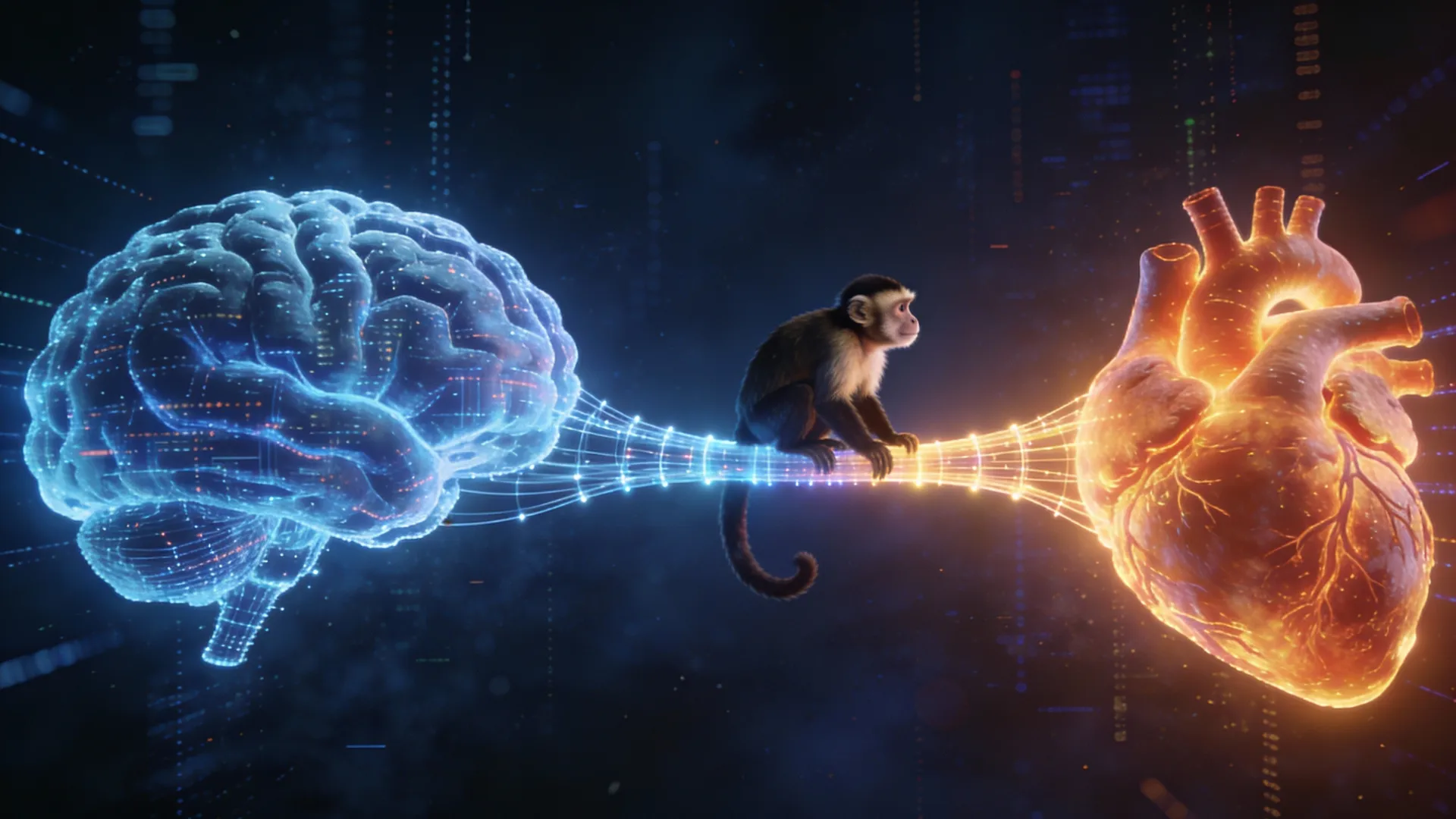
AI advertising has become an essential part of modern digital marketing. From automated bidding and predictive targeting to generative visuals and copy, artificial intelligence now shapes how advertising campaigns are planned, delivered, and optimised.
Yet, despite its growing sophistication, AI advertising often struggles with one critical challenge: establishing a genuine human connection.
Many AI-driven ads are efficient, data-led, and scalable – but they can also feel impersonal, generic, or emotionally flat. They may attract attention briefly, yet fail to build trust or long-term brand affinity. This gap is not a technological flaw; it is a psychological one.
At Midnight Monkey, we see AI advertising not as a replacement for human thinking, but as a powerful tool that must be guided by it. When psychology and neurodesign principles shape AI-powered campaigns, advertising becomes more intuitive, engaging, and genuinely human.

How You Can Leverage AI Advertising And Psychology
This article examines seven psychology-based techniques that enhance the resonance of AI advertising with audiences — and why understanding how the brain works has become a strategic advantage in digital advertising.
1. Emotion Comes Before Logic
Neuroscience shows that emotion plays a central role in decision-making. Research by neuroscientist Antonio Damasio revealed that people with impaired emotional processing struggle to make decisions at all — even when their logical reasoning remains intact.
In AI advertising, optimisation often prioritises performance metrics such as click-through rates, impressions, and conversions. While these are important, they do not explain why people choose to engage.
Emotionally intelligent AI advertising:
- Uses imagery that evokes familiarity, aspiration, or belonging.
- Frames messaging around human needs rather than product features.
- Considers tone, mood, and context as carefully as placement.
A Nielsen study found that ads with strong emotional appeal performed nearly twice as well as those focused purely on rational information.
AI can refine delivery at scale, but emotional relevance still comes from human insight.
2. Cognitive Load Determines Whether People Stay Or Scroll
The human brain is efficient but selective. When content feels demanding or confusing, attention drops almost instantly.
AI advertising can unintentionally increase cognitive load by producing variations that are information-heavy, visually cluttered, or message-dense. When too many elements compete for attention, the brain disengages.
Cognitive load theory tells us that:
- Simpler layouts improve comprehension.
- Clear visual hierarchy reduces friction.
- Focused messaging improves recall.
This principle is central to neurodesign, particularly in web experiences. We explore this in depth in our article on neurodesign in web design, where clarity directly influences user behaviour.
The same principles apply to AI advertising. When creatives are designed for mental ease, performance improves naturally.
3. Familiarity Builds Trust Faster Than Novelty
Humans are pattern-recognition machines. The brain prefers what feels familiar because familiarity signals safety and reliability.
In AI advertising, this explains why some technically impressive ads fail to connect. They may be novel, but they lack recognisable human cues – conversational language, predictable structure, or emotional rhythm.
Psychological familiarity can be built through:
- Natural sentence flow instead of overly polished copy.
- Visual styles that align with established brand cues.
- Narrative structures people intuitively understand.
Google research shows that users form impressions of ads in under 50 milliseconds, often before conscious evaluation begins.
Effective AI advertising, therefore, blends optimisation with familiarity, rather than chasing novelty for its own sake.
4. Personalisation Should Feel Considered, Not Intrusive
Personalisation is one of AI advertising’s greatest strengths – and its greatest risks.
While relevance improves engagement, excessive or hyper-specific targeting can trigger discomfort. Studies published in the Journal of Consumer Psychology show that when consumers feel overly observed, trust declines and resistance increases.
Psychologically responsible AI advertising focuses on:
- Contextual relevance rather than surveillance-level detail.
- Behavioural patterns over personal identity.
- Transparency and ethical data use.
In the UK and EU, this approach also aligns with GDPR expectations and evolving public sentiment around data privacy. When personalisation feels respectful rather than invasive, audiences respond more positively.

5. Storytelling Still Outperforms Data Alone
Despite advances in automation, the human brain remains wired for stories. Narratives help people organise information, remember messages, and attach meaning.
AI advertising often fragments messaging into platform-specific assets. Without narrative cohesion, campaigns can feel disconnected, even if each asset performs well individually.
Story-led AI advertising:
- Maintains a consistent emotional thread across formats.
- Reinforces brand identity rather than repeating features.
- Uses AI to optimise reach, not replace meaning.
Harvard Business School research suggests stories are up to 22 times more memorable than facts presented alone.
Machines can distribute content efficiently. Humans must still define the story worth telling.
6. Visual Hierarchy Guides Behaviour Subconsciously
Neurodesign teaches us that the brain does not process visual information evenly. It scans, prioritises, and filters almost instantly. But first, what is Neurodesign? Neurodesign is the practice of neuroscience and psychology to shape digital design around how people naturally think, feel, and make decisions. This helps experiences feel intuitive, engaging, and human.
In AI advertising, visual hierarchy influences:
- What users notice first.
- How long is attention sustained?
- Whether action feels intuitive or forced.
Poor hierarchy creates friction, even when targeting and timing are perfect. This is why principles used in website neurodesign are just as relevant to advertising creativity.
When visual flow feels effortless, behaviour follows without resistance.
7. Trust Is The Real Conversion Metric
As AI advertising becomes more visible, scepticism increases. Audiences are increasingly aware of automation, synthetic media, and algorithmic persuasion.
According to the Edelman Trust Barometer, trust now outweighs price and convenience in purchase decisions.
Psychologically grounded AI advertising builds trust through:
- Authentic tone and language.
- Consistent brand behaviour across touchpoints.
- Transparency about intent and value.
When trust is present, performance metrics tend to follow organically.
What This Means For Brands Using AI Advertising Today
AI advertising is no longer just a technical advantage; it is a strategic one. Brands that rely solely on automation risk blending into a sea of efficient but forgettable messaging.
Those that combine AI capability with psychological understanding:
- Build stronger emotional connections.
- Reduce creative fatigue.
- Improve long-term brand equity.
The future of AI advertising belongs to brands that understand how people think, not just how algorithms optimise.
Future Human-Centred AI Advertising
At Midnight Monkey, we approach AI advertising through a human-first lens. Technology enables scale and precision, but psychology creates meaning.
If you are exploring AI advertising and want campaigns that:
- Feel authentic rather than automated,
- Respect attention and intelligence,
- Build trust over time,
Then psychology and neurodesign should guide every decision.
👉 Get in touch with Midnight Monkey to explore how human-centred AI advertising can elevate your brand’s advertising strategy:
Read More
SEO In 2026: How AI Changed Search — And What Actually Ranks Now.